
Date : Lundi 13 juin 2022 à 14h
Lieu : 5017
Abstract
Climate change is a pressing societal problem that is already affecting many people and that is projected to affect many more. There is increasing recognition that psychology plays an important role in understanding the ways in which people respond to climate change, as well as in promoting positive behavioral changes and psychological wellbeing. This presentation will review some of the ways in which psychology can help address climate change: understanding factors that encourage or discourage accurate risk perceptions; describing current and potential impacts of climate change on mental health and psychological wellbeing; and exploring ways to encourage positive responses that promote individual as well as community resilience. Throughout, I will highlight the importance of attending to identity. Social identities can both inhibit and facilitate effective responses, and personal identities both affect, and are affected by, changes in environmental conditions. I will specifically discuss the idea of an environmental identity – a self-concept that incorporates a sense of interdependence with the natural world. I will close with a discussion of important areas for further research.
Short bio
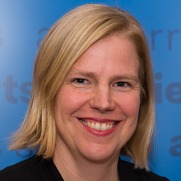
Susan Clayton , Ph.D., is the Whitmore-Williams Professor of Psychology at the College of Wooster in Ohio and a visiting fellow at the Paris Institute for Advanced Studies, 2021-22. Dr. Clayton’s research examines people’s relationship with the natural environment, how it is socially constructed, and how a healthy relationship with nature can be promoted. She has written about the effects of climate change on mental health, and has developed a scale to assess climate anxiety. She is author or editor of six books, including Identity and the Natural Environment, Conservation Psychology, and Psychology and Climate Change, and is currently the editor of the Cambridge Elements series in Applied Social Psychology and on the editorial board for journals such as the Journal of Environmental Psychology and Sustainability. A fellow of the American Psychological Association, she was a lead author on the Sixth Assessment Report of the Intergovernmental Panel on Climate Change.
Web
https://discover.wooster.edu/sclayton/
Twitter: @sdclaytonphd
À lire aussi
Roxane de la Sablonnière : Prédire le changement social dramatique avec un algorithme : réalité ou fiction ?
Lundi 21 septembre à 14h30 en salle du Conseil © Résumé du séminaire : Des événements perturbateurs — tels que les coups d’État, les pandémies ou les catastrophes naturelles — peuvent transformer radicalement une société en remettant en cause le statu quo, un...

Soutenance de thèse de Céline Robert
Lundi 6 juillet 2026 en salle du Conseil à 14h © Titre : Réponses sociales à l'exclusion : Examens des réponses spontanées et des réponses comportementales en milieu scolaire Résumé : L'exclusion sociale, définie comme le fait d'être mis à l'écart par autrui, conduit...

Co-Direction de l’axe Discriminations et politiques catégorielles du LIEPP
Catherine Verniers est Co-Directrice de l’axe Discriminations et politiques catégorielles du LIEPP (Laboratoire Interdisciplinaire d'Evaluation des Politiques Publiques, plateforme de recherche de Science Po) depuis janvier 2026....

Projet inIdEx Cité du Genre (France 2030, ANR-18-IDEX-0001)
Le LPS est associé au projet inIdEx Cité du Genre depuis le 1er janvier 2025 (France 2030, ANR-18-IDEX-0001).Virginie Bonnot en est la Directrice, Catherine Verniers et Cristina Aelenei sont membres du Conseil Scientifique et Pédagogique....